Global startupsCompany profile
Tabby: from a ‘pay later’ button to a USD 6.5 billion fintech in Riyadh
Tabby, the Riyadh buy now, pay later company: its founders, rounds from USD 1.5 to 6.5 billion, licences in Saudi Arabia and the UAE and plans for a listing.

Contents
Tabby is the fintech that made interest-free instalment shopping, or buy now, pay later, mainstream in the Middle East. It started with a button at online checkout that splits a payment into several parts. By its own figures it now has 25 million registered users, 70,000 business partners and more than USD 18 billion in annualised transaction volume. The company is based in Riyadh, operates in Saudi Arabia, the United Arab Emirates and Kuwait, and in September 2026 investors valued it at USD 6.5 billion.
Hosam Arab's second company
Tabby was founded in 2019 by Hosam Arab and Daniil Barkalov. Arab, the chief executive, had earlier co-founded the regional fashion retailer Namshi, which Emaar acquired in 2019, according to a July 2026 profile by Entrepreneur Middle East.
The company began in the UAE. In 2023 it moved its headquarters to Saudi Arabia, where, Arab told Arab News in December 2023, 75 to 80% of its customers came from. The Saudi market has shaped its regulatory path since: Tabby graduated from the Saudi Central Bank's (SAMA) regulatory sandbox and received a buy now, pay later licence in 2025.
From deferred payments to everyday banking
The original product splits a purchase into instalments that the customer pays without interest. Over time Tabby added the Tabby Card for in-store spending, the Tabby Plus subscription, a shopping app and buyer protection. In September 2024 it took over Tweeq, a SAMA-licensed Saudi digital wallet that brought accounts, cards and transfers.
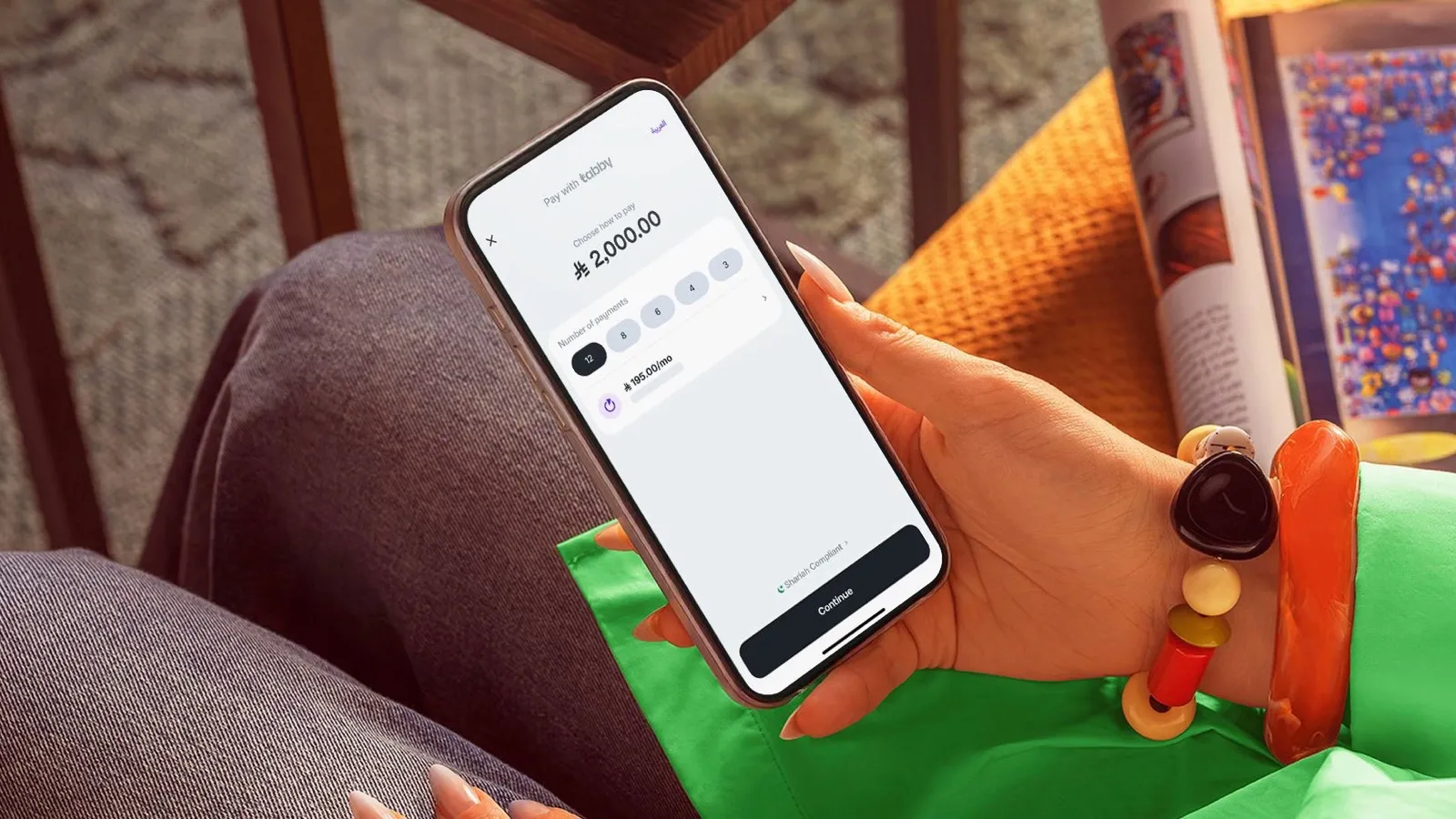
In 2026 Tabby gained two sets of licences. In April the Central Bank of the UAE granted it a Stored Value Facilities licence, and in July it launched Tabby Cash, a fee-free account with a cashback card, which the company said was already used by more than 150,000 people. A newsroom headline dated 9 November 2026 reports one million accounts in the UAE. On 29 June 2026 SAMA granted consumer and SME finance licences: longer plans on purchases above SAR 2,000, up to SAR 50,000 in as many as 12 monthly payments on a Murabaha structure, plus working capital for merchants.
From USD 1.5 billion to 6.5 billion in under three years
| Item | Value | Source |
|---|---|---|
| Founded | 2019, Hosam Arab and Daniil Barkalov | Entrepreneur Middle East |
| Headquarters | Riyadh (moved from the UAE in 2023) | Arab News, Tabby |
| Markets | Saudi Arabia, UAE, Kuwait | Tabby |
| Series D | USD 200 million, 1 Nov 2023, valuation above USD 1.5 billion; extended to USD 250 million | Tabby |
| Series E | USD 160 million, 12 Feb 2025, valuation USD 3.3 billion | Tabby |
| Secondary sale | 28 Oct 2025, implied valuation USD 4.5 billion, no new shares | Tabby |
| Series F | USD 233 million, 14 Sep 2026, valuation USD 6.5 billion | Tabby |
| Users, partners | 25 million, 70,000 (September 2026) | Tabby |
| Annualised volume | over USD 18 billion (September 2026) | Tabby |
The Series D in November 2023 was led by Wellington Management, with Blue Pool Capital as a new investor and existing backers STV, Mubadala, PayPal Ventures and Arbor Ventures. In December 2023 Tabby extended the round to USD 250 million with Saudi Arabia's Hassana Investment Company, Soros Capital Management and Saudi Venture Capital, and secured up to USD 700 million in receivables securitisation, a form of debt financing, from J.P. Morgan.
The USD 160 million Series E in February 2025 was led by Blue Pool Capital and Hassana; at the time Tabby reported more than 15 million users and annualised volume above USD 10 billion. In October 2025 buyers including HSG and Boyu Capital bought shares from existing shareholders; Tabby issued no new shares and received no proceeds.
The Series F of 14 September 2026 raised USD 233 million. It was led by Hong Kong's Blue Pool Capital, which according to Tabby manages assets for Joe Tsai, with HSG, Wellington Management and Arbor Ventures taking part. It includes an option for employees to sell shares; since 2023 Tabby has facilitated more than USD 100 million of such sales. The deal remains subject to regulatory approvals, including SAMA's. For how a funding round translates into a company valuation, see How to value a company.
The road to a Saudi listing
Tabby mentioned a planned IPO in Saudi Arabia in its 2023 Series D announcement and tied its February 2025 round to the upcoming listing. Bloomberg, as cited by Saudi outlet Argaam, reported in 2025 that it had hired HSBC, JPMorgan and Morgan Stanley, with no decision yet on timing or size. As of 17 November 2026 Tabby had announced neither a filing nor a listing date in its newsroom.
What to watch at Tabby
- SAMA approval of the Series F and any further steps towards a listing, including a prospectus with audited figures.
- Credit risk: longer instalment plans and loans to small businesses change the risk profile compared with short interest-free instalments.
- Regulation of deferred payments: rules for buy now, pay later keep evolving in the region and globally.
- Competition: other pay-later providers and banks with their own apps are active across the Middle East.
Company cards and watchlists for firms in many countries are part of JOuInvest; plans are on the pricing page.
Questions
What does Tabby offer?
It started with a pay-later option at online checkout that splits a purchase into instalments. It now also offers the Tabby Card for in-store spending, the Tabby Plus subscription, a shopping app, longer instalment plans of up to SAR 50,000 in Saudi Arabia, and in the UAE the Tabby Cash account with a card and transfers.
Who founded Tabby and where is it based?
Hosam Arab, the CEO, and Daniil Barkalov founded Tabby in 2019. Arab previously co-founded the fashion retailer Namshi. The company started out in the UAE and moved its headquarters to Saudi Arabia in 2023; it is now described as based in Riyadh.
How much has Tabby raised and what is it worth?
Its Series D in 2023 was extended to USD 250 million at a valuation above USD 1.5 billion. The Series E in February 2025 raised USD 160 million at USD 3.3 billion. A secondary share sale in October 2025 implied USD 4.5 billion, and the Series F in September 2026 raised USD 233 million at USD 6.5 billion.
Is Tabby going public?
Tabby referred to a planned IPO in Saudi Arabia in its 2023 Series D announcement. In 2025 Bloomberg, as cited by Argaam, reported that it had picked HSBC, JPMorgan and Morgan Stanley, with no decision yet on timing or size. As of 17 November 2026 the company had not announced a listing date.
Sources
- Tabby: Tabby raises $233 million at $6.5 billion valuation (14 Sep 2026), accessed 17 Nov 2026
- Tabby: Tabby announces completion of secondary share sale (28 Oct 2025), accessed 17 Nov 2026
- Tabby: Tabby raises $160M Series E funding at $3.3B valuation (12 Feb 2025), accessed 17 Nov 2026
- Tabby: Tabby secures $200M in Series D funding at $1.5B valuation (1 Nov 2023), accessed 17 Nov 2026
- Tabby: Tabby secures $700M in debt financing from J.P. Morgan and extends its Series D round to $250M (21 Dec 2023), accessed 17 Nov 2026
- Tabby: Tabby secures finance licences from the Saudi Central Bank (29 Jun 2026), accessed 17 Nov 2026
- Tabby: Tabby puts money back in its place (Tabby Cash, July 2026), accessed 17 Nov 2026
- Tabby Newsroom (list of announcements), accessed 17 Nov 2026
- Arab News: Tabby's tremendous transformation into a unicorn (24 Dec 2023), accessed 17 Nov 2026
- Entrepreneur Middle East: The Finance Frontier 2026, Hosam Arab (29 Jul 2026), accessed 17 Nov 2026
This article is general information, not tax, legal or investment advice.