Czech and Slovak startupsCompany profile
Mewery: the Brno startup growing pork cells alongside microalgae
Mewery in Brno grows pig cells together with microalgae. Its founder and investors, a EUR 2.5 million EIC grant, its 2023 to 2025 accounts and a 300 g/L yield.

Contents
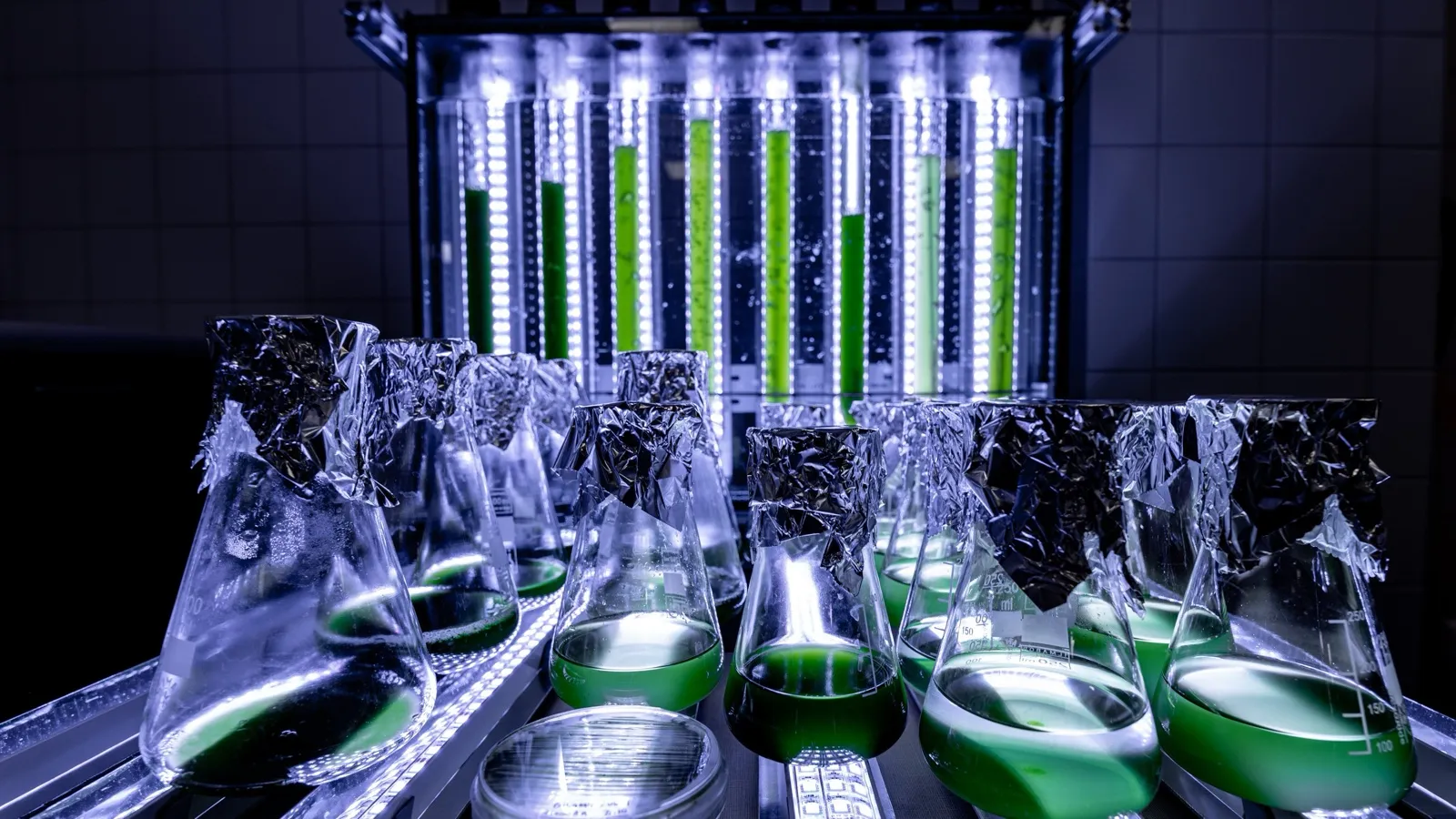
Mewery is a Brno startup developing cultivated meat: it grows pig cells together with microalgae in a bioreactor so that, as the company puts it, animals no longer need to be raised and slaughtered for meat. What Roman Lauš started in 2021 has become a team of fourteen, six of them with a PhD, with laboratories in Brno and a EUR 2.5 million grant from the European EIC Accelerator programme. In March 2026 the company reported a biomass yield of 300 g per litre, which its founder calls one of the basic parameters deciding whether cultivated meat can be commercially viable.
From RightNow inspire to Mewery
The Czech commercial register entered the company on 14 October 2019 as RightNow inspire s.r.o., wholly owned by Simply Office s.r.o. Roman Lauš became managing director on 1 July 2021, and on 7 October 2021 the register recorded the new name Mewery s.r.o. (company ID 08598690, registered at Moravské náměstí 754/13, Brno). According to the company website, Lauš previously co-founded Global DTP and Home Institute and was part of the founding team of the Future Port Prague festival. The website also credits clinical biologist Kristýna Kvardová with helping to found Mewery.
Today's leadership consists of founder Roman Lauš (CEO), chief technology officer Moria Shimoni, previously CTO at Believer Meats and Forsea Foods, and chief commercial officer Rostislav Brzobohatý. On the research side the company works with the Czech Academy of Sciences and Mendel University.
Animal cells and algae in one vessel
The core of the technology is co-cultivation: animal cells grow together with microalgae, which the company says improves cell growth and lowers costs. Mewery works without fetal bovine serum and has adapted its cells to grow in suspension, without the carriers that cells would otherwise need to attach to. The output is a biomass called OMNIA, and the first product is OMNIA Pork.
According to the company timeline, the first cell-based prototype came in 2022, the combination of cells and algae a year later and a stable porcine cell line with a cell bank in 2024. In 2025 Mewery opened a 200-litre R&D facility, and in 2026 it passed 300 g of biomass per litre. Public tastings are still being prepared, according to its website. The company is also a member of ALLIANCE, a Horizon Europe consortium led by Wageningen University in the Netherlands with 19 partners from eight countries.
Grants, funds and one majority shareholder
In spring 2022 the accelerator and fund Big Idea Ventures picked Mewery from about 300 companies, according to CzechCrunch. In October 2022 it announced a pre-seed round from Credo Ventures and Purple Ventures, which Protein Report put at just under USD 1 million. In July 2025 came a EUR 2.5 million EIC Accelerator grant: Mewery received the Seal of Excellence and the money was provided by the Technology Agency of the Czech Republic from national sources. That brought its funding to EUR 3 million in the previous year and over EUR 4 million since inception, according to the press release. In March 2026 the Croatian deep-tech fund Vesna VC joined with an amount CzechCrunch described as a high single-digit number of millions of Czech crowns. The company also lists the SeedBlink platform and CzechInvest among its backers.
The commercial register tells a different story about ownership than the investor list might suggest. As of 17 November 2026, Roman Lauš holds about 96.2% of the shares, Společnost Po ruce s.r.o. 2.5%, Jan Kupka 1.25% and Purple Ventures s.r.o. 0.1%. The company has not disclosed in what form the other investors came in.
The 2023 to 2025 accounts
Mewery files abridged financial statements through the tax authority. 2025 brought its first revenue and a much larger balance sheet: liabilities rose from CZK 9.8 million to CZK 62.8 million and current assets from CZK 7.6 million to CZK 59.0 million. Other operating income was CZK 11.6 million; the notes to the accounts do not break it down.
| Item | Value | Source |
|---|---|---|
| Incorporated, company ID | 14 Oct 2019, 08598690 | ARES |
| Registered office | Moravské náměstí 754/13, Brno | ARES |
| Founder and managing director | Roman Lauš | commercial register, company website |
| Revenue 2024 / 2025 | nil / CZK 1.5 million | 2025 accounts |
| Net result 2023 / 2024 / 2025 | loss of CZK 5.3 / 2.4 / 1.2 million | 2024 and 2025 accounts |
| Total assets 31 Dec 2024 / 2025 | CZK 20.1 / 73.9 million | 2025 accounts |
| Equity 31 Dec 2025 | CZK 10.6 million (2024: CZK 10.3 million) | 2025 accounts |
| Employees | average of 10 in 2025 (2024: 7) | notes to the accounts |
| EIC Accelerator grant | EUR 2.5 million, July 2025 | press release |
| Raised since inception | over EUR 4 million (July 2025) | press release |
Early-stage companies like this are rarely valued on earnings; for the main approaches, see How to value a company. In JOuInvest you can open the company card with owners, filings and links by searching the registries for company ID 08598690.
What to watch at Mewery
- The next funding round: in March 2026 the company said it was raising money for industrial validation and pilot-scale production with European partners; it did not state an amount.
- Pilot projects with meat producers: the 2025 press release promised them in the EU, including the Czech Republic.
- Regulation: in the EU, cultivated meat has to be authorised as a novel food before it can be sold, which governs when and where the company can start selling.
- The 2026 accounts: they will show how the grant and new money translate into costs, headcount and fixed assets.
Plans for following companies like this one are on the pricing page.
Questions
What does Mewery do?
Mewery develops cultivated meat: it grows pig cells together with microalgae in a bioreactor, with the algae forming the basis of the growth medium. The result is a biomass called OMNIA intended as a food ingredient; the first species-specific version is OMNIA Pork. The company has laboratories in Brno and, according to its website, a 200-litre R&D facility.
Who owns Mewery?
According to the Czech commercial register on 17 November 2026, founder and managing director Roman Lauš holds about 96.2% of the shares. The other shareholders are Společnost Po ruce s.r.o. (2.5%), Jan Kupka (1.25%) and the fund Purple Ventures s.r.o. (0.1%). Other investors named on the company website are not among the registered shareholders.
How much has Mewery raised?
According to a July 2025 press release, it had raised more than EUR 4 million since inception, including EUR 3 million in the previous year and a EUR 2.5 million EIC Accelerator grant. CzechCrunch put the total at over CZK 100 million in March 2026. The October 2022 pre-seed round from Credo Ventures and Purple Ventures was just under USD 1 million according to Protein Report, and the Croatian fund Vesna VC joined in March 2026.
What are Mewery's financial results?
According to the accounts in the Czech Collection of Deeds, revenue was CZK 1.5 million in 2025 (none in 2024), other operating income CZK 11.6 million and the net loss CZK 1.2 million. The loss was CZK 2.4 million in 2024 and CZK 5.3 million in 2023. Equity stood at CZK 10.6 million at the end of 2025.
Sources
- ARES, economic entity 08598690 (Mewery s.r.o.), accessed 17 Nov 2026
- Czech commercial register, Mewery s.r.o., Regional Court in Brno C 114398, accessed 17 Nov 2026
- Collection of Deeds, Mewery: financial statements 2024 (SL18) and 2025 (SL19), accessed 17 Nov 2026
- Mewery: Company (team, milestones, backers), accessed 17 Nov 2026
- Mewery: 300 g/L biomass yield. A new CTO (March 2026), accessed 17 Nov 2026
- Mewery: Media (logo and press materials), accessed 17 Nov 2026
- Protein Report: Mewery secures €3 million toward industrial testing (30 Jul 2025), accessed 17 Nov 2026
- Protein Report: Mewery receives pre-seed investment (19 Oct 2022), accessed 17 Nov 2026
- CzechCrunch: V Brně pěstují vepřové v laboratoři, teď hlásí zásadní milníky (18 Mar 2026), accessed 17 Nov 2026
- CzechCrunch: Brněnské vepřové z laboratoře je blíže sériové výrobě (31 Jul 2025), accessed 17 Nov 2026
This article is general information, not tax, legal or investment advice.